
Linq Partner Portal
Empowering partners with a streamlined way to manage customers, numbers, and billing.
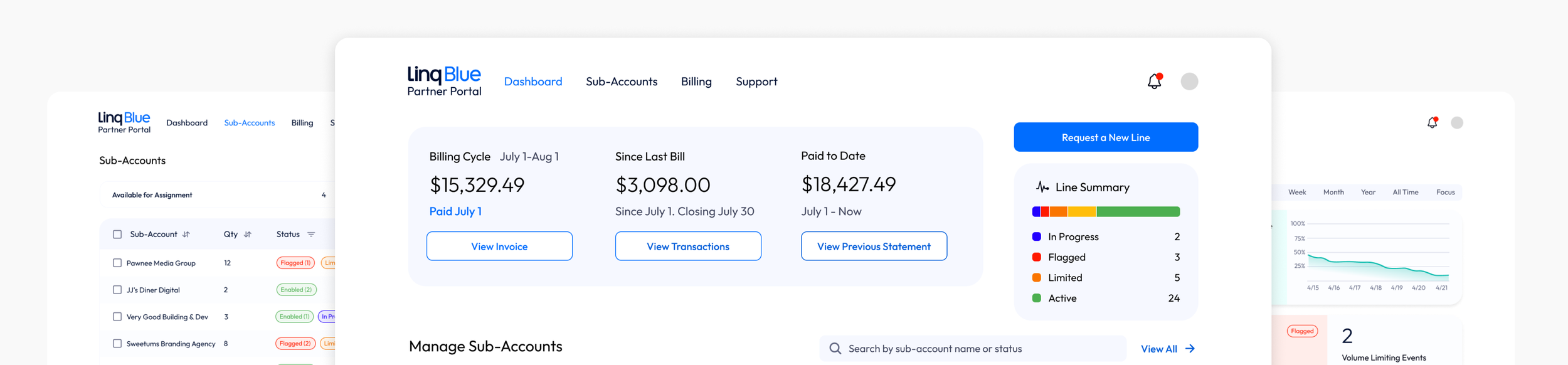
Overview
Linq’s growth strategy included a partner and reseller program, where agencies and resellers could provision phone numbers, manage customer accounts, and handle billing on behalf of their clients. Until this project, everything was handled manually by our internal success team, which created friction, delays, and made scaling very difficult.
Users & Audience
Primary Users:
Reseller Admins – Agencies or business owners managing dozens of customer accounts at once. They needed visibility into usage, billing, and compliance.
Partner Team Members – Employees within those agencies who handled setup, customer support, and day-to-day account management.
Secondary Users (Internal):
Linq Success Team – Benefited indirectly, since the portal reduced manual intervention, email chains, and troubleshooting.
Roles & Responsibilities
My Role: Lead Product Designer
Timeline: Spring & Summer 2025
Team: CEO, COO, CTO, President, Engineering Lead, Success Team
Tools: Figma
I led design for the Partner/Reseller Portal, a new platform that gave partners self-serve access to everything they needed: accounts, numbers, billing, and compliance. I led 3 rounds of design critiques to get to the final dev-ready designs.
Constraints
Timeline: Project needed to launch quickly to onboard early reseller partners.
Resources: Small cross-functional team (1 designer, 1 PM, small engineering squad).
Tech limitations: Portal had to integrate with existing billing and number-provisioning systems, which restricted certain design choices.
Compliance: Features had to align with A2P 10DLC regulations and telecom requirements, limiting how flexible provisioning could be.
MVP-first approach: Nice-to-have features like advanced analytics, role-based permissions, and reporting were intentionally scoped out for future iterations.
Scope & Constraints
Scope
Deliver a minimum viable portal that allowed partners to:
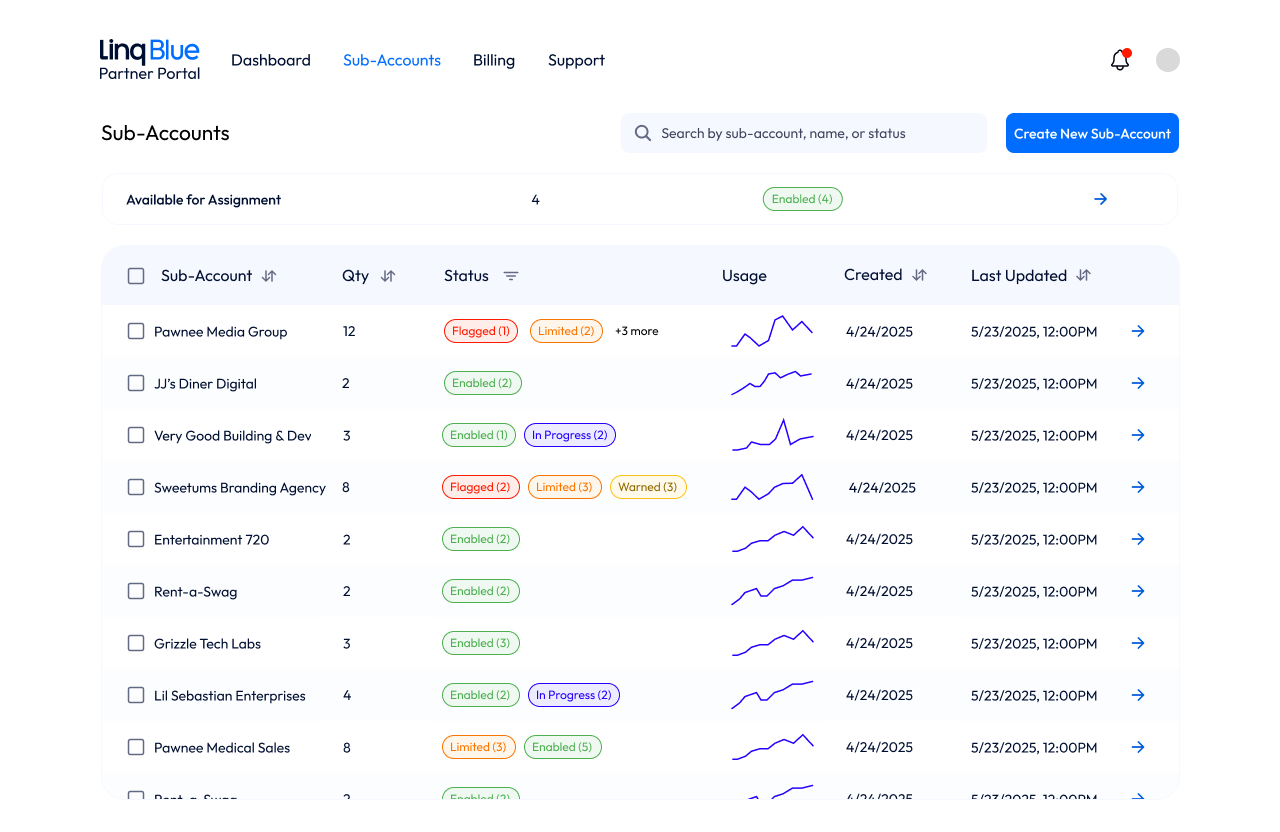
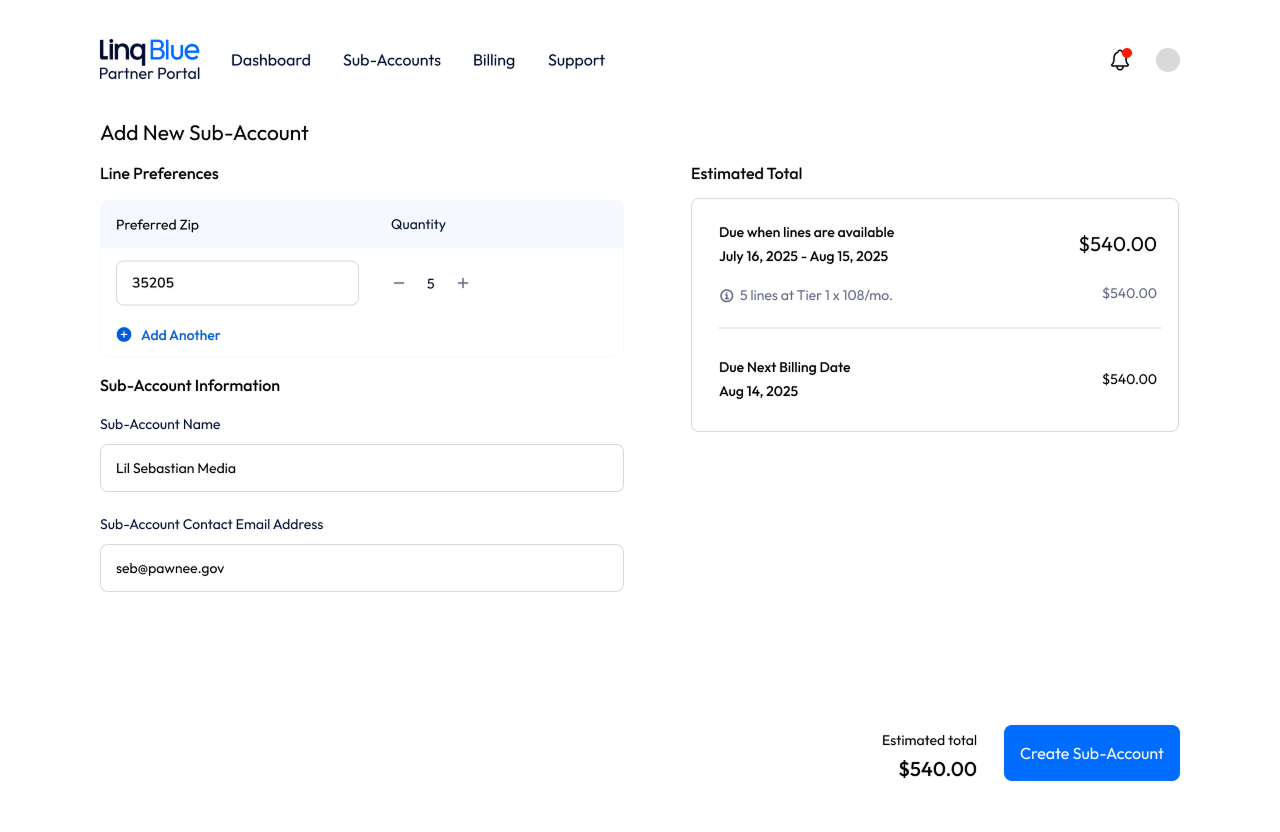
Create and manage sub-accounts.
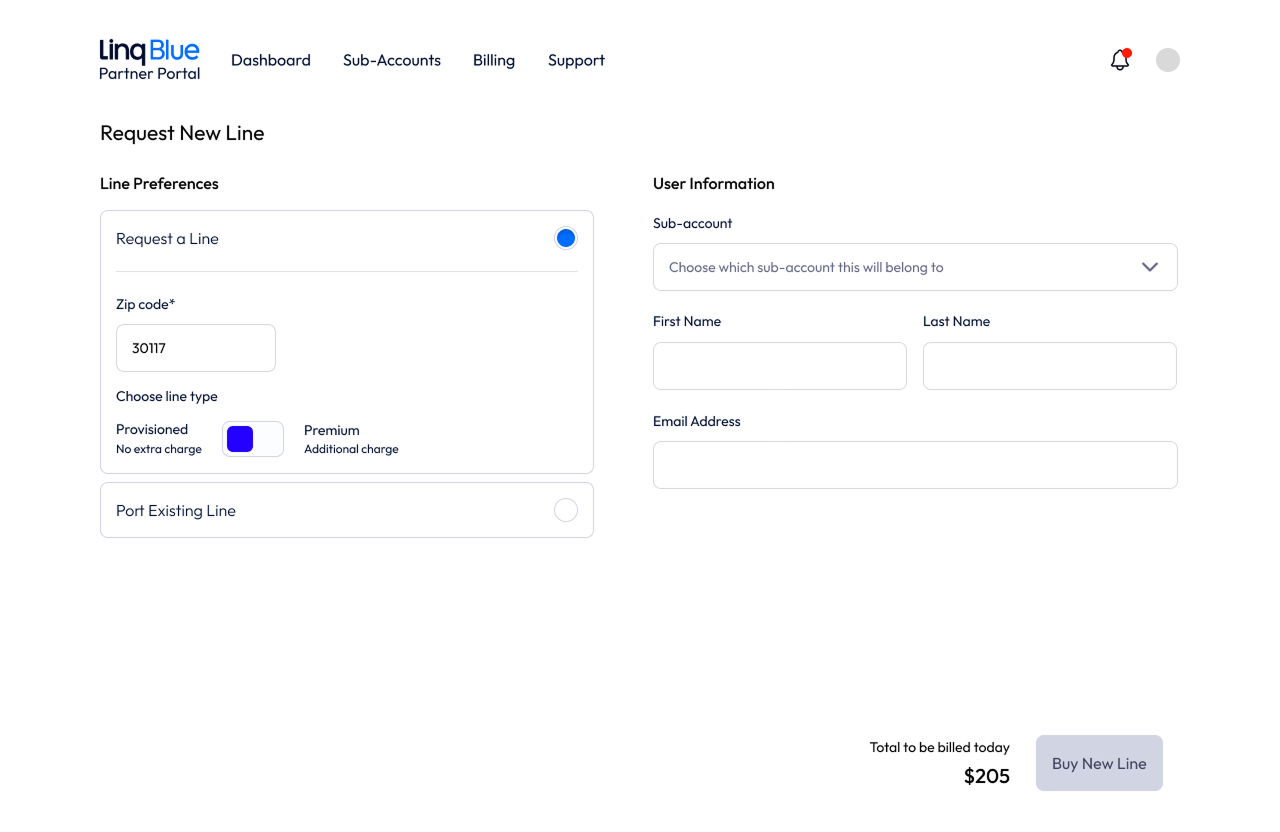
Provision and move phone numbers.
View invoices and apply credits.
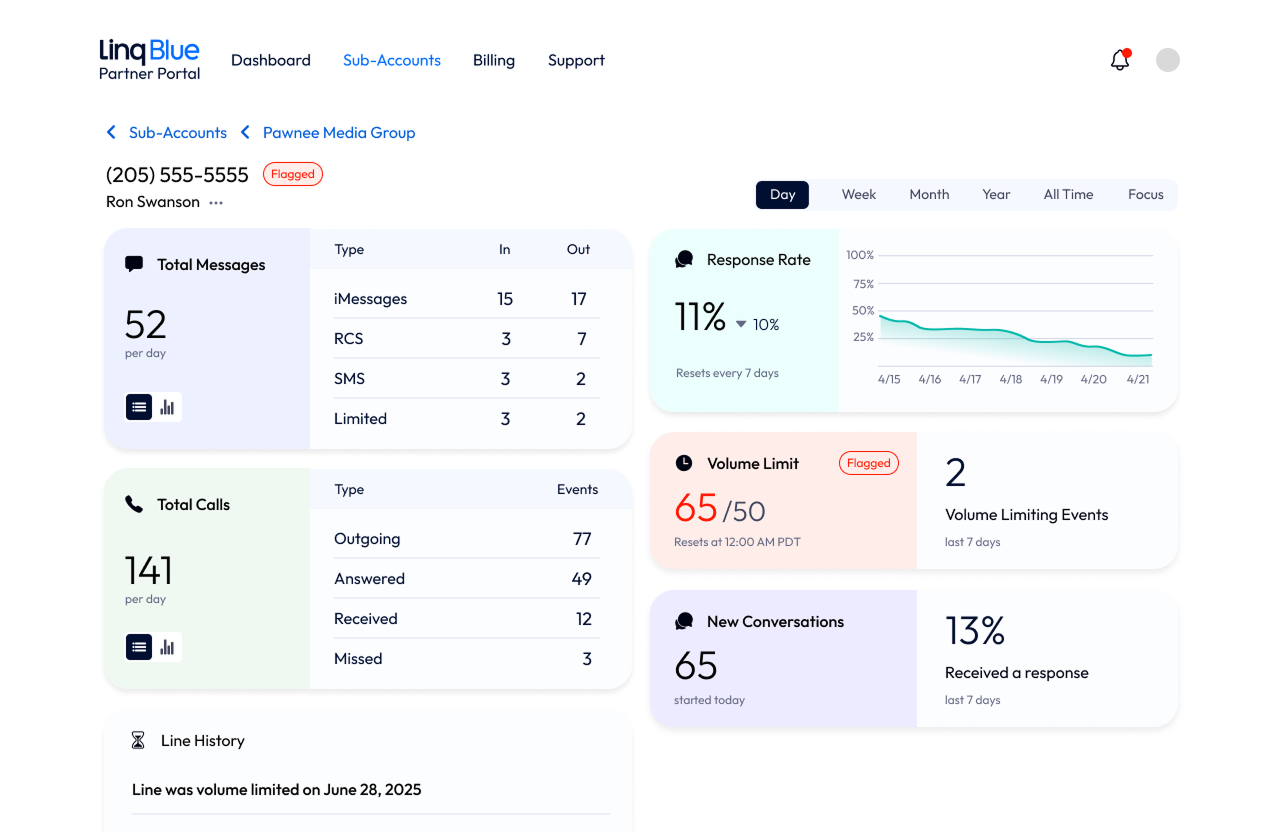
Access account health at a glance.
Focus was on essential workflows (onboarding, billing, compliance), not full-featured analytics or reporting.
The Challenge
Partners needed a centralized hub to:
Manage multiple customer sub-accounts
Assign and provision phone numbers
View invoices and apply credits
Stay compliant with carrier rules
The old process relied on email chains and spreadsheets. It was slow, prone to errors, and didn’t scale with Linq’s growing partner base.
Problem Statement:
How might we give partners control over their customers’ accounts while keeping it simple and transparent?
Research & Discovery
Since this was a brand-new initiative, I worked closely with Linq’s C-suite team and the head of Team Success to understand what partners and resellers needed most. The success team had been manually managing all partner activity up until this point, so they had first-hand knowledge of the pain points.
Key Insights
Partners needed visibility at a glance: credits, account health, and invoices.
Sub-account creation was a manual, clunky process that slowed down onboarding.
Compliance rules (e.g., “burned” or “flagged” numbers) were confusing and required clearer language and better in-product explanations.
I also performed a competitive review of reseller-style SaaS portals (like NumberBarn and agency dashboards in marketing tools) to understand how other platforms structured provisioning, billing, and account hierarchies.
Design Process
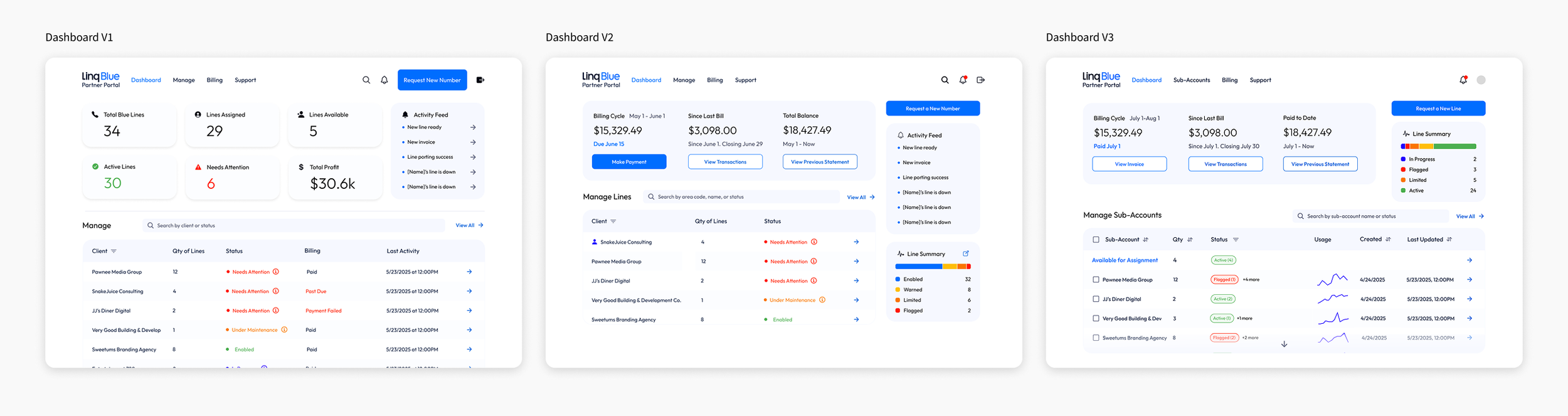
I structured the portal around a clear hierarchy:
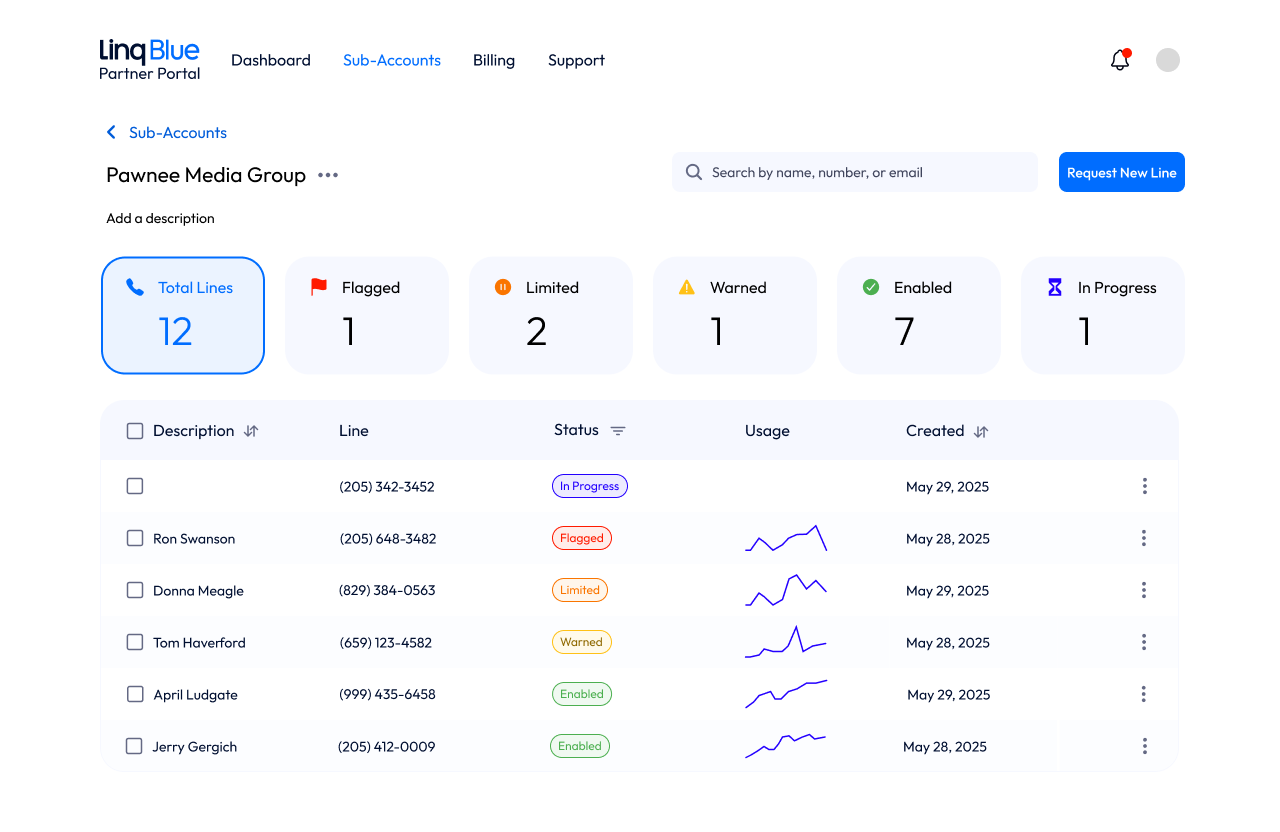
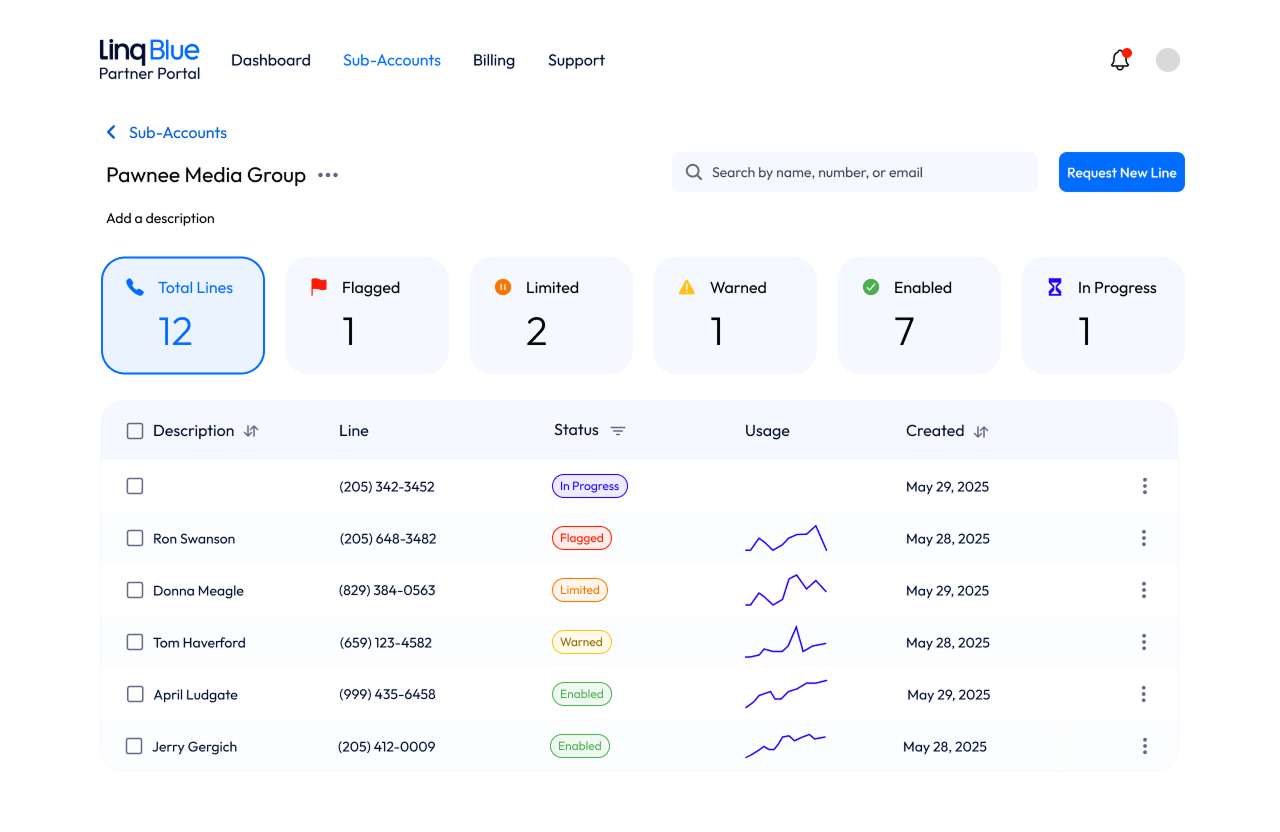
Accounts → Sub-Accounts → Lines
Wireframes & Flows: Early explorations focused on dashboards, provisioning, and billing actions.
Collaboration: Conducted design critiques with the C-suite and Team Success to validate priorities and workflows.
Iterations: Added features like inline sub-account creation, requesting new numbers with ability to select specific area codes, and clearer invoice states.
Design System Improvements
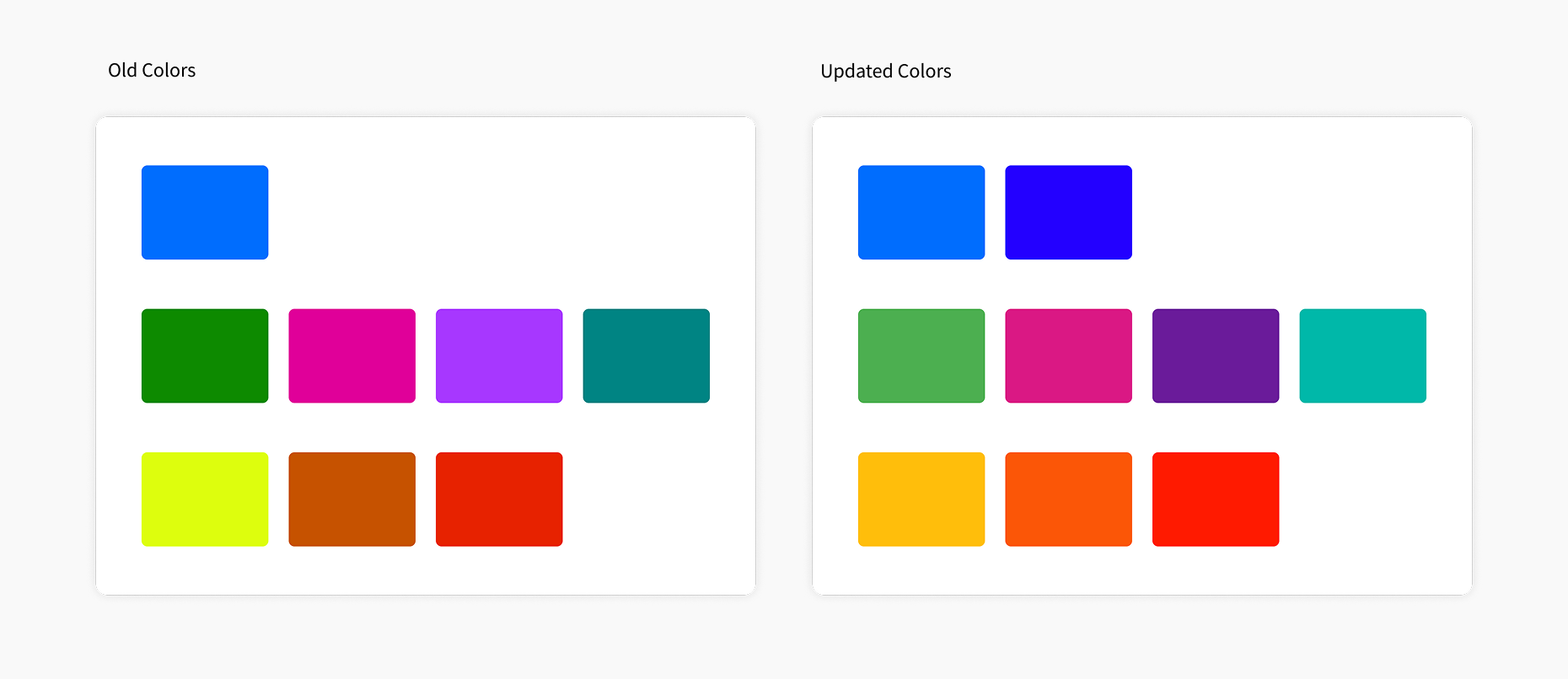
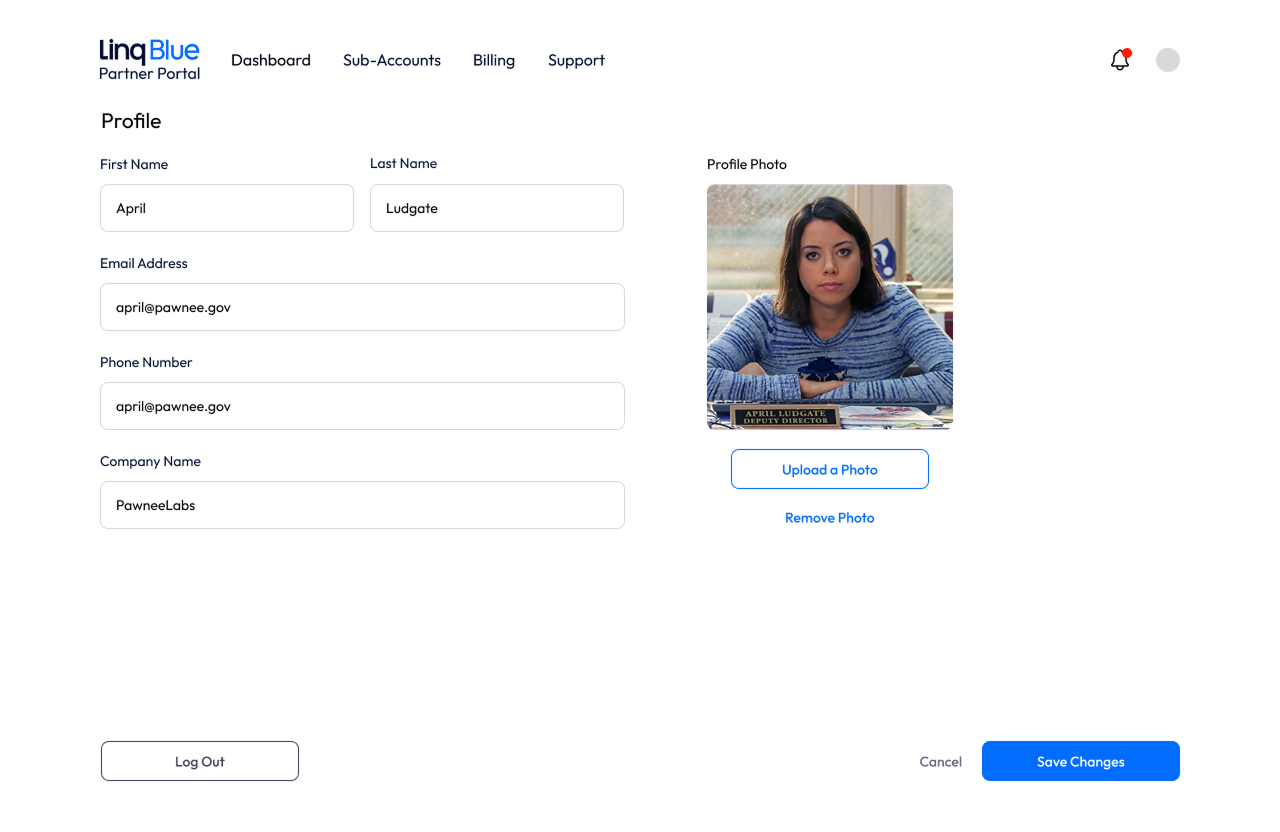
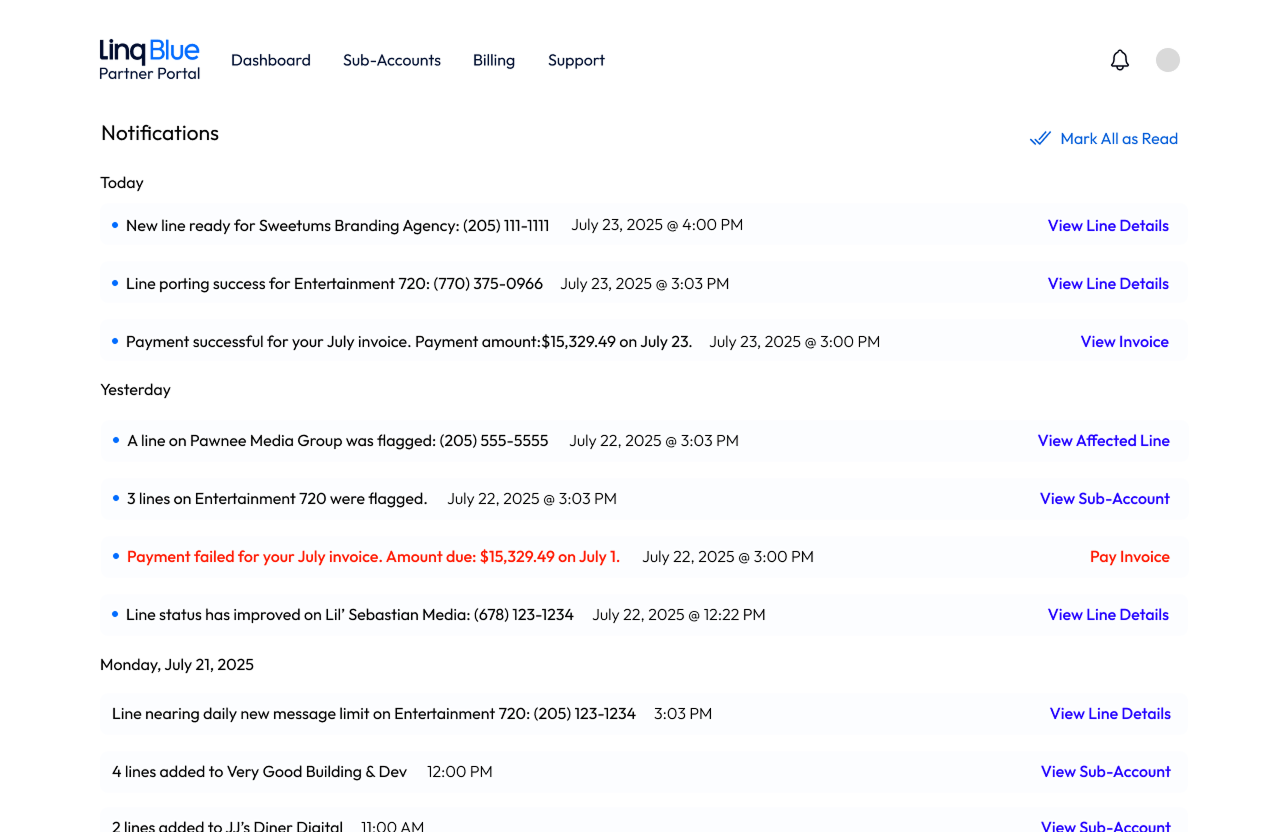
Redesigned older, clunky components and patterns to be more scalable, consistent, and intuitive.
Introduced a refreshed color palette that modernized the look and improved accessibility.
Established component variations (e.g., cards, modals, tables) that could be reused across Linq products, ensuring consistency between the Partner Portal and Linq One/Blue.
Key Features
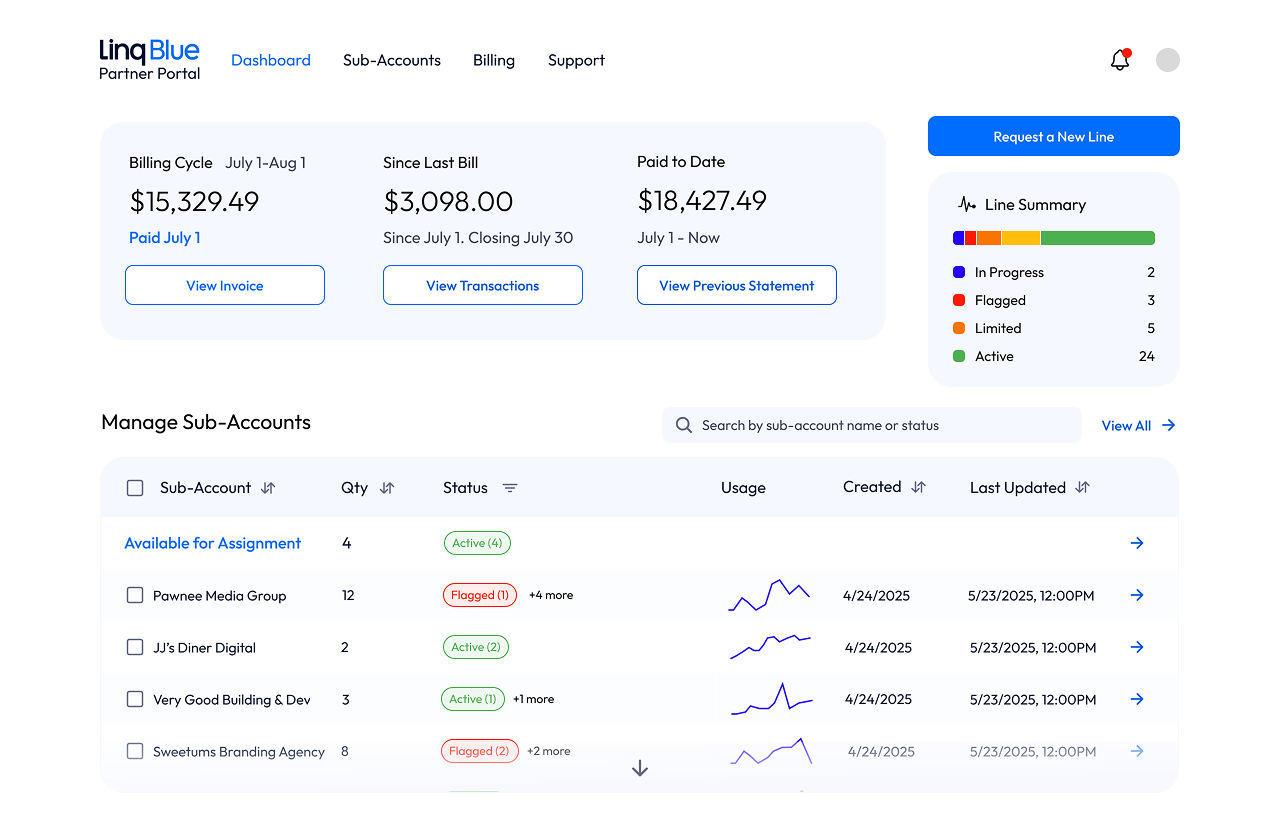
Dashboard: Overview of credits, invoices, usage, and account health.
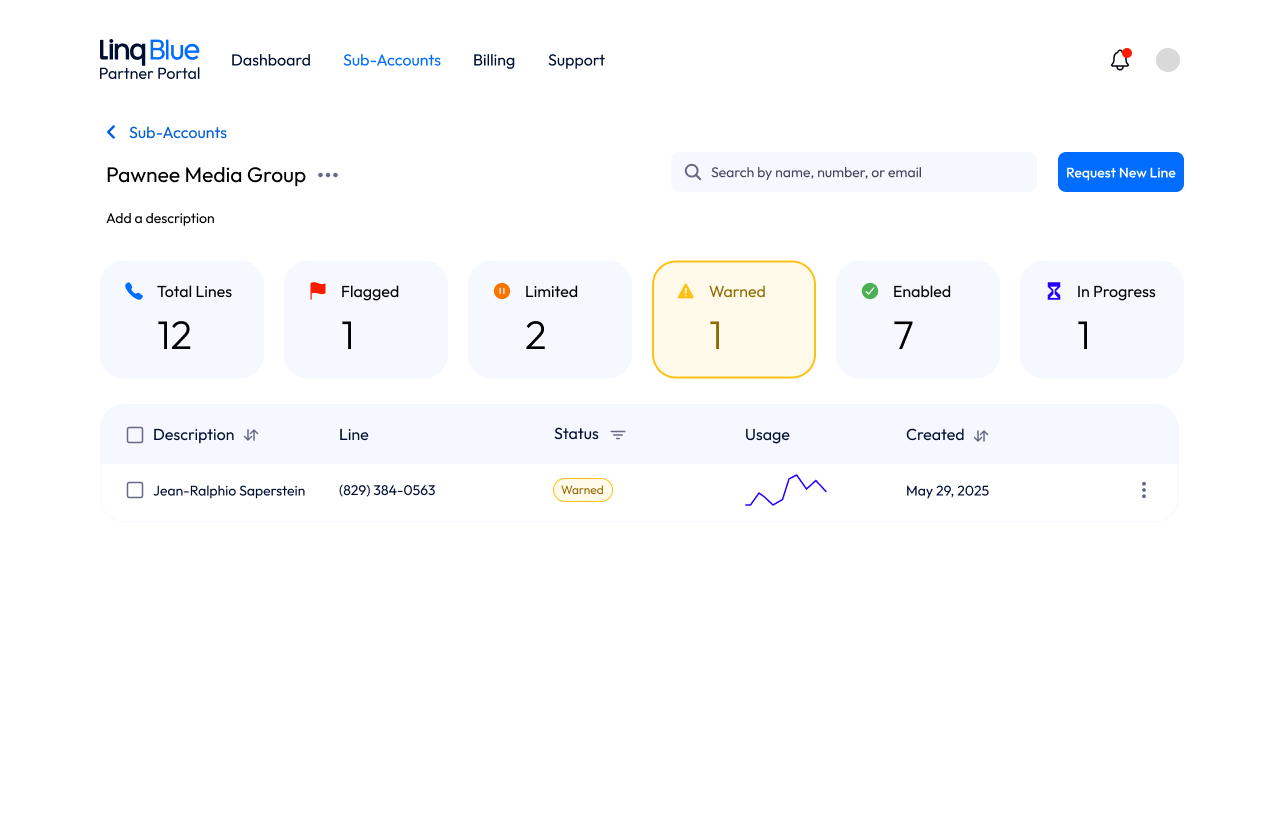
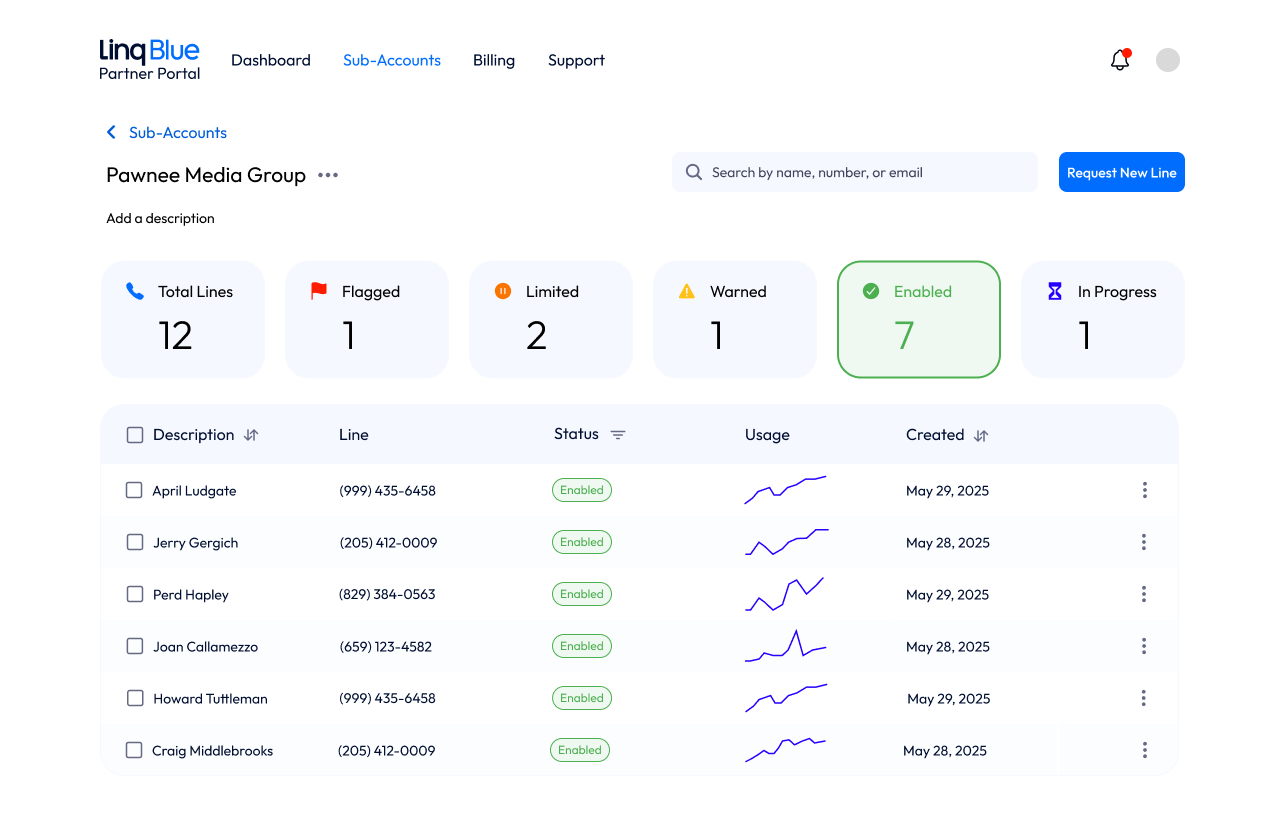
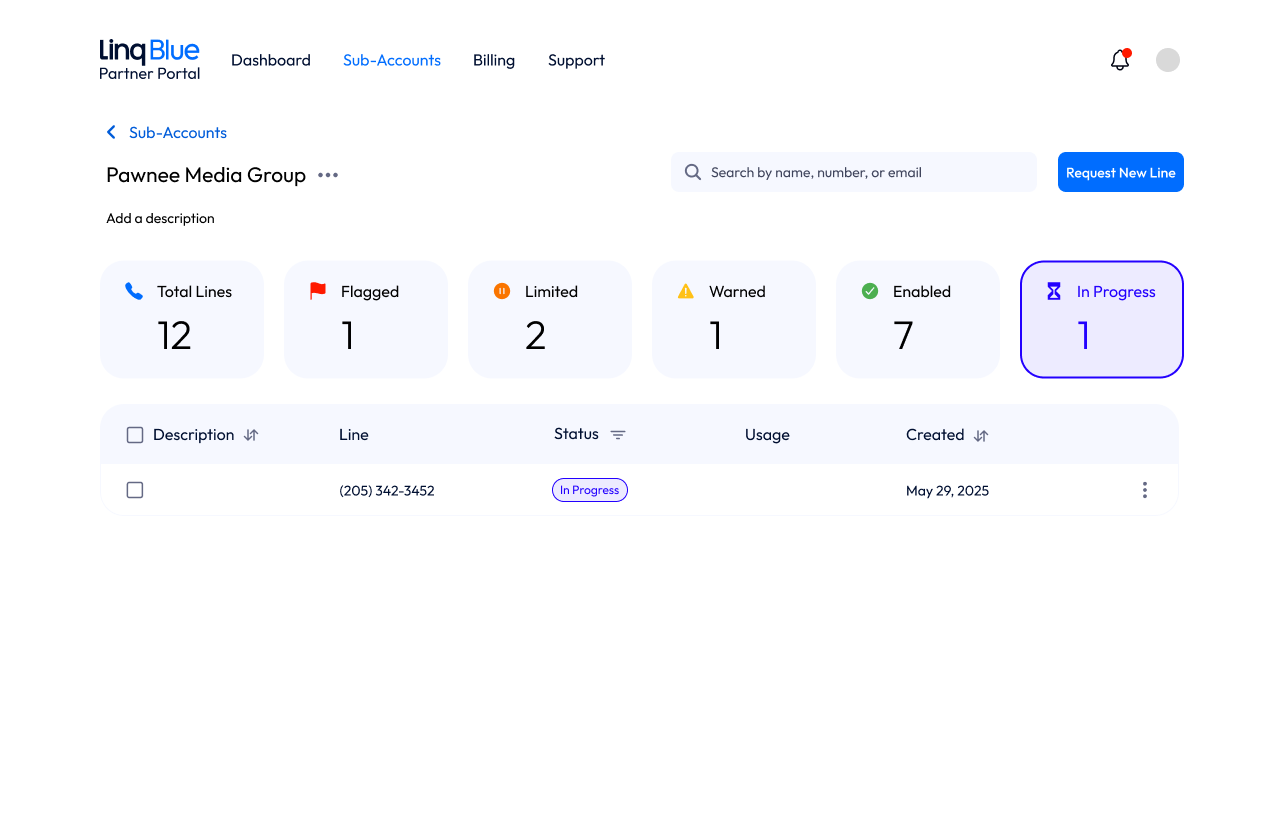
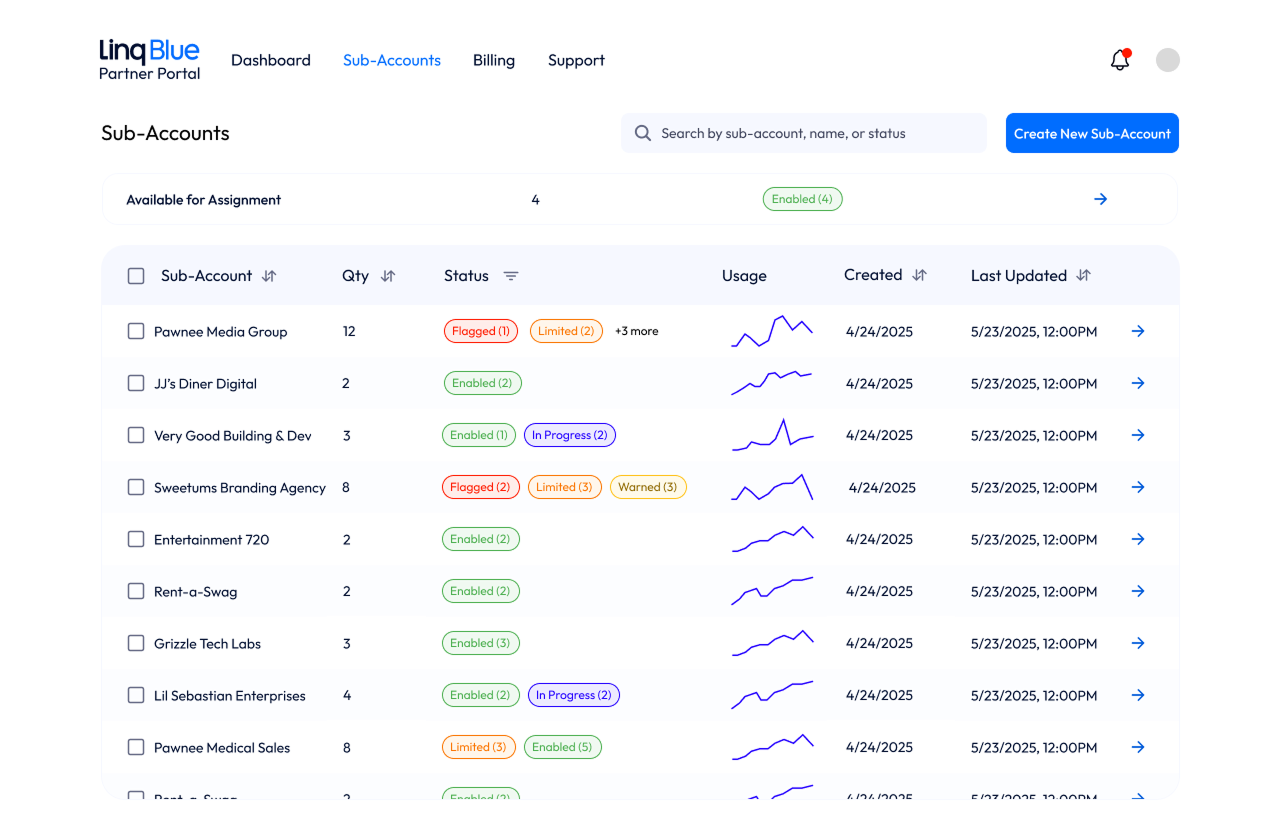
Sub-Account Management: Create and organize customers, move phone lines between accounts.
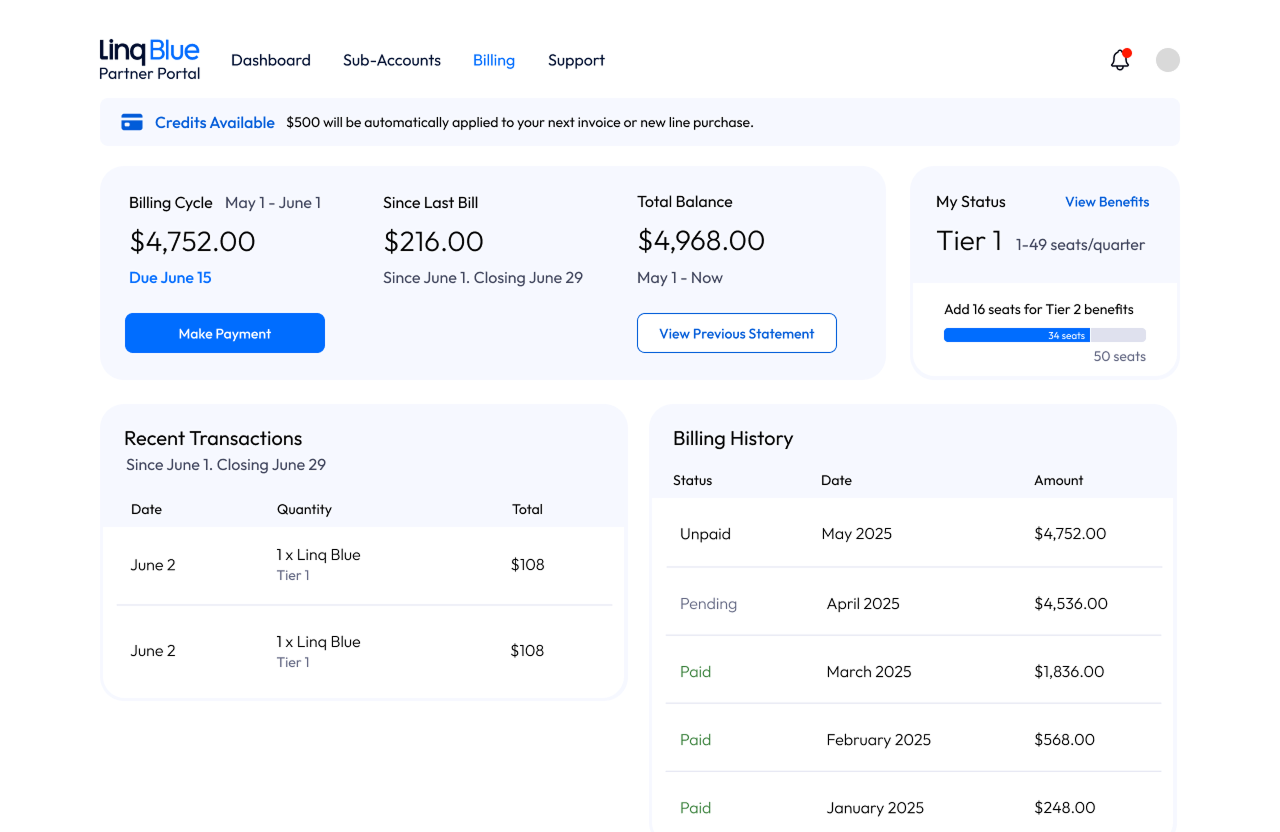
Billing & Credits: Partners can apply credits directly, recharge invoices, or void failed ones.
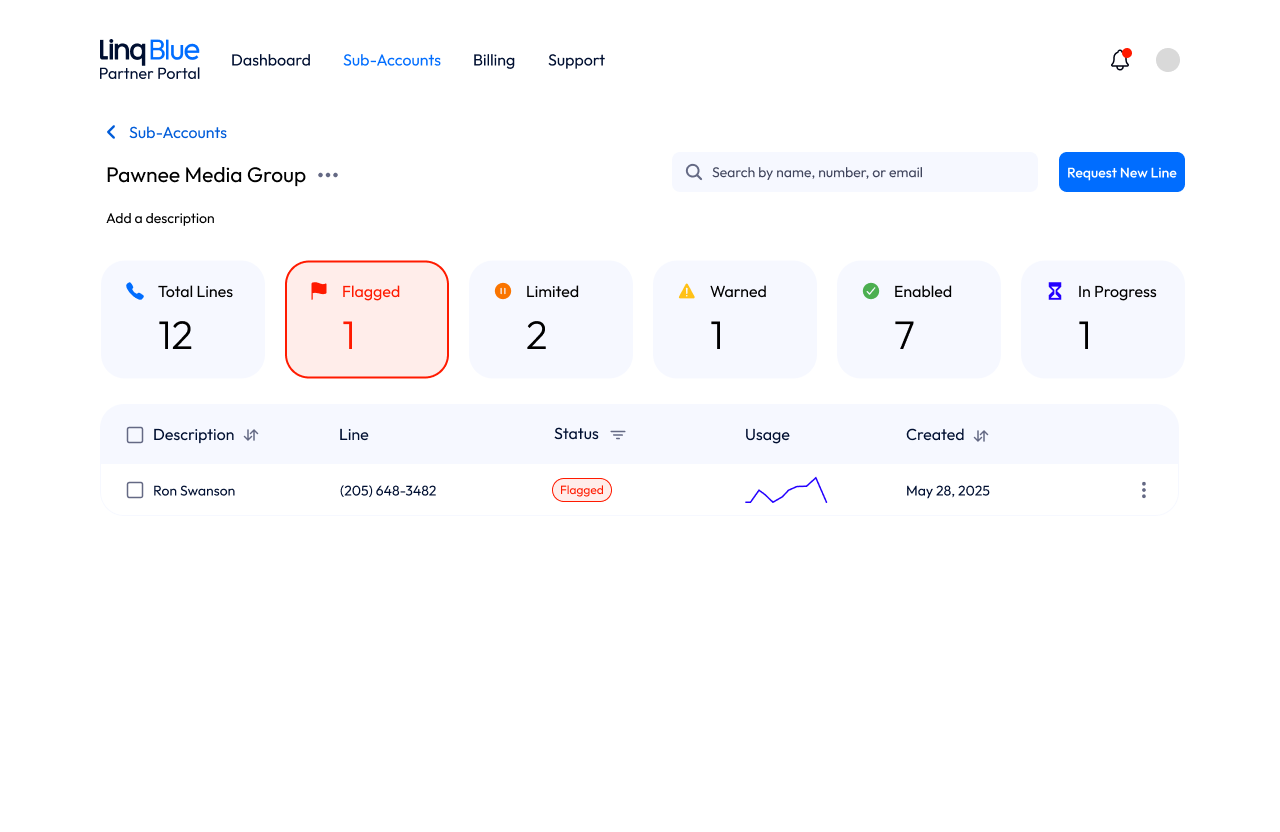
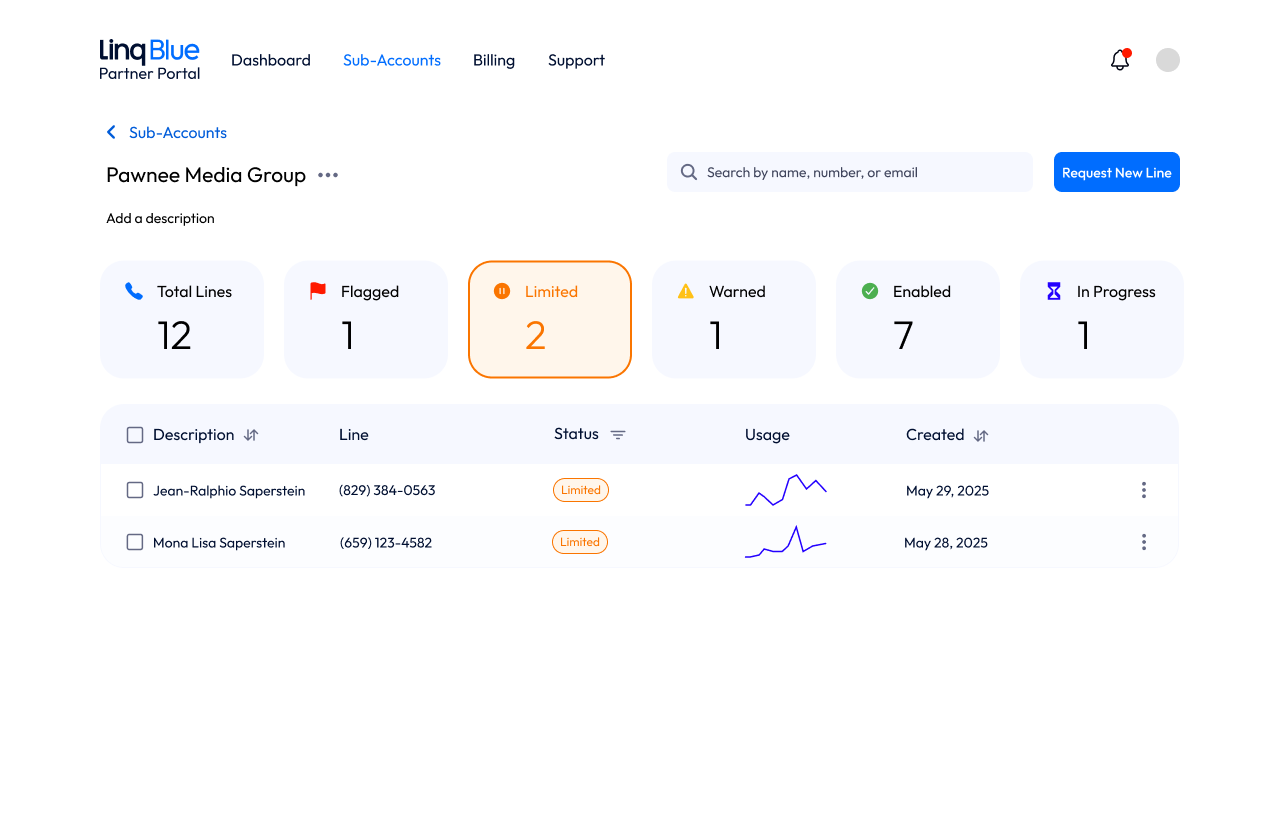
Compliance Visibility: Clear number states (active, flagged, limited, porting) with tooltips explaining what they mean.
Outcome
Launched MVP: Partners onboarded directly without success-team intervention.
Efficiency Gains: Manual partner support reduced significantly.
Positive Feedback: Early partners reported better visibility into their accounts and less reliance on internal support.
Scalable Foundation: Portal now supports tiered resellers with seat-based pricing and is expandable to richer analytics.
Reflection
This project reminded me how important it is to design for two audiences: the partner (ease of use, efficiency) and the internal success team (reducing overhead, ensuring compliance).
What worked:
Early testing with partners shaped critical features.
Building on existing design system patterns sped up delivery.
What I’d improve:
Deeper analytics earlier in the roadmap.
Role-based permissions for larger reseller organizations.
Next steps include expanding analytics (engagement rates, call history) and tighter integrations with Linq’s billing system.